
Assessing the effects of MaaS on mobility practices — Île-de-France Mobilities

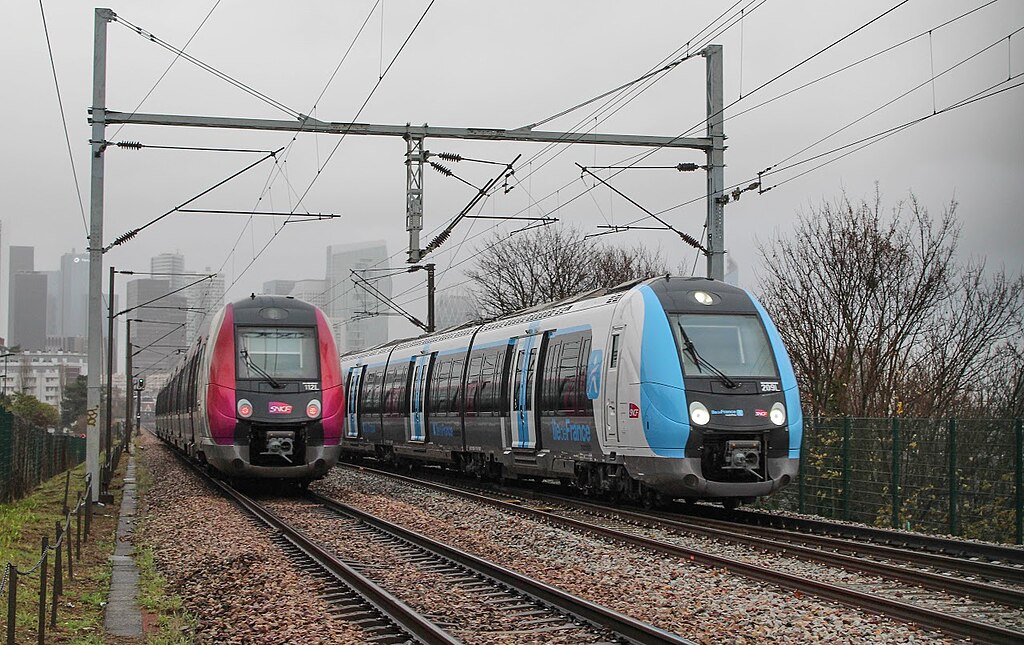
Two Z 50000 self-propelled cars with SNCF Carmillon and Île-de-France Mobilities liveries - Author: Momo Ratp

Île-de-France Mobilities (IDFM) confided to Explain one groundbreaking study on the impact of MaaS (Mobility as a Service) on daily travel practices. The objective: quantify, model and anticipate the effects of new subscription scenarios and the integration of mobility services, in order to assess their potential in terms of modal shift and optimization of uses.

Objectifs clés

In a context of rapid transformation of urban mobility, the MaaS concept is changing the way users access transport: aggregation of offers, unified billing, integrated digital services.
For Île-de-France Mobilities, it was about Concretely measure behavioral impacts of this evolution in the demand for regional mobility, and translate these effects into IDFM's multimodal simulation model.

Explain designed and implemented a comprehensive approach, combining behavioral analysis, modeling and technological integration:

  1. Identification of profiles and motivations
    • Animation of Focus groups to explore the perception of MaaS, the obstacles and levers to adoption, and sensitivity to price or ease of use.
  2. Declared preference surveys (SP)
    • Design of a experimental questionnaire simulating different subscription formulas (integrated packages, flexible options, ecological bonuses).
    • Analysis of impacts on behavior: frequency, reasons for travel, modal choice, destinations, schedules.
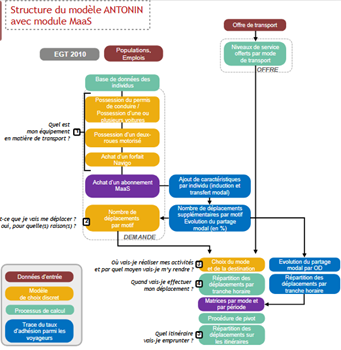
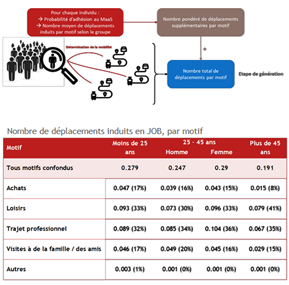
  3. Econometric estimation and integration into the IDFM model
    • Estimation of the behavioral parameters associated with each user profile.
    • Development of a specific implementation method to the existing multimodal model, maintaining its disaggregated structure.
  4. Support for implementation and monitoring
    • Writing a MaaS module implementation guide, to facilitate the handling of the enriched model.
    • Support for IDFM in the calibration and testing of new subscription modules.

The study also included a prospective analysis of long-term effects MaaS on modal distribution, user loyalty and the economic balance of networks.

Bénéfices

The mission aimed to:

  • Identify the behavioral effects of MaaS on users of Île-de-France;
  • Integrate these effects into the multimodal simulation model from IDFM;
  • Evaluate the modal shift potential to public transport and shared modes;
  • Provide operational tools for the design of innovative pricing and digital policies.

Conclusion

The mission resulted in the production of a comprehensive documentation and implementation guide of the MaaS module.
Convinced by the quality of the work carried out, Île-de-France Mobilities renewed its confidence by entrusting Explain with the audit of the simulation tool deployed for the Paris 2024 Olympic and Paralympic Games.
Client
IDF Mobility
Année
2024

Join a team expert and committed

Explain is a demanding, caring team, and always curious to welcome new profiles. Do you want to learn, transmit and have a real impact on the mobility of tomorrow? Let's talk about it.

Text Rotate
Background Image