




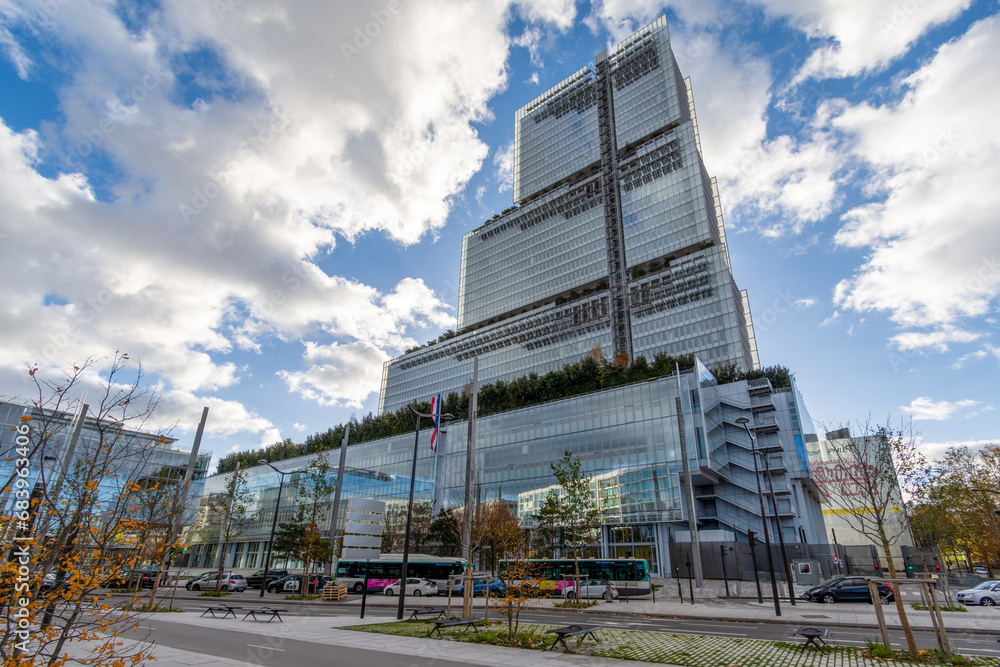
The Judicial Court of Bobigny, located in the heart of Seine-Saint-Denis, faces a increasing pressure linked to the increase in litigation and the dilapidated nature of existing infrastructures.
In order to improve reception, working and business conditions, the Department of Justice has initiated a project ofextension and modernization of the site, including the construction of new buildings and the reorganization of services.
Explain has been tasked with driving thesocio-economic assessment of the project, prior to its inclusion in the State's multi-year budget.
The mission consisted of several components:
The study made it possible to demonstrate the economic and social relevance of the project, by highlighting a positive net balance under several investment hypotheses.
The main objective of the mission was toEquipping public decision-making by objectifying the costs and benefits of the operation in compliance with the requirements of public investment regulations.
Explain aimed to:
The study conducted by Explain Brought to Department of Justice one robust and well-reasoned decision support base, integrating at the same time the economic, social and urban aspects of the project. It allowed quantifying the positive impacts in terms of judicial efficiency, the attractiveness of public services and territorial cohesion.The approach has also strengthened the transparency of economic justification of a major public investment, in accordance with the standards required by the State.
The socio-economic assessment conducted by Explain allows the Ministry of Justice to have a clear vision of the contributions of the project to extend the judicial court in Bobigny. The effects identified in this study will facilitate the work for future socio-economic evaluations.
The socio-economic assessment conducted by Explain allows the Ministry of Justice to have a clear vision of the contributions of the project to extend the judicial court in Bobigny. The effects identified in this study will facilitate the work for future socio-economic evaluations.



.jpg)

.jpg)


%20(1).webp)