





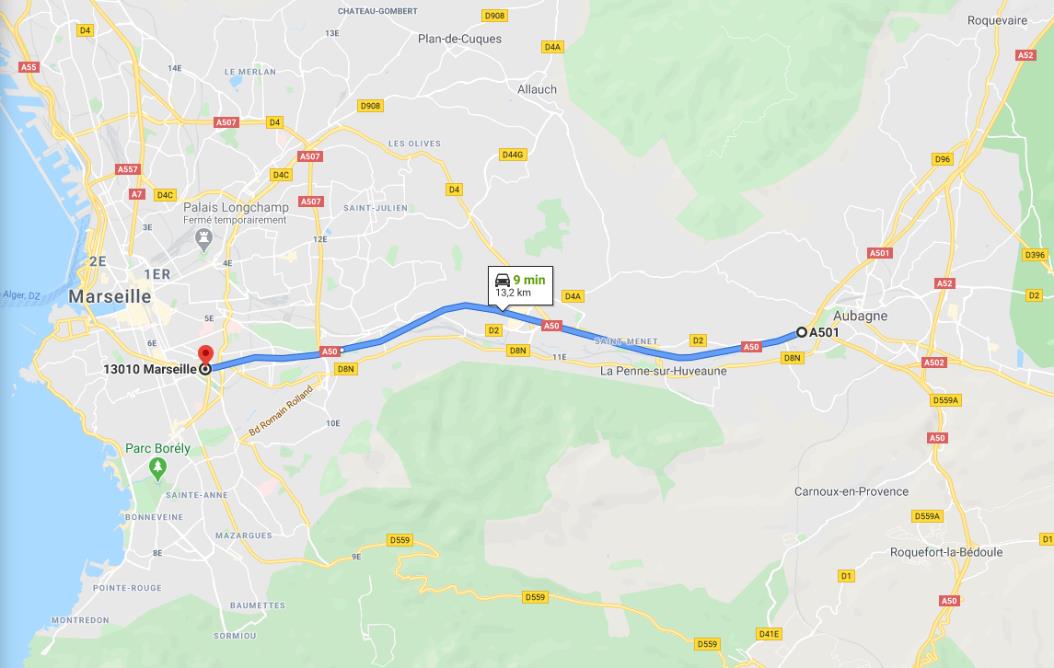
This project aimed to model recurrent congestion observed on the highway sector A50/A501, a strategic entry point into Marseille, which is particularly busy at peak times.
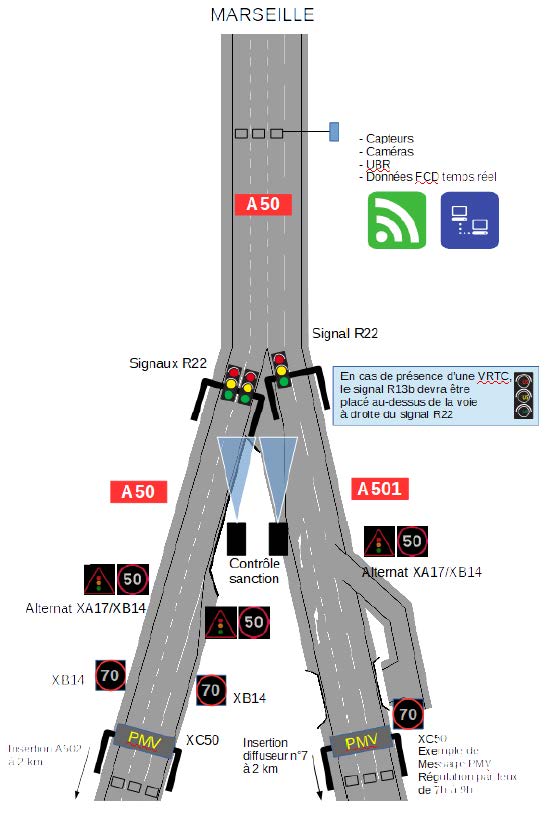
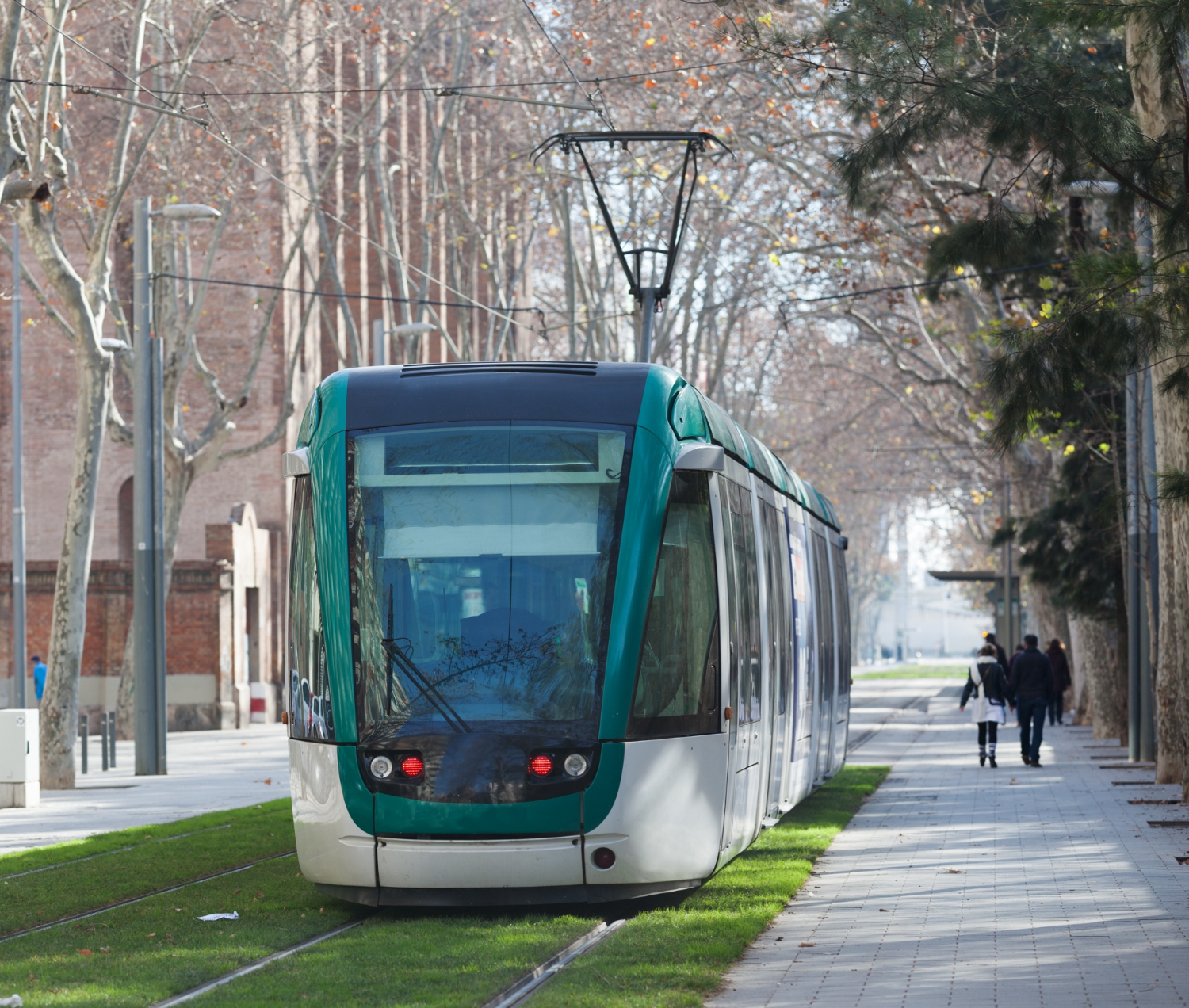
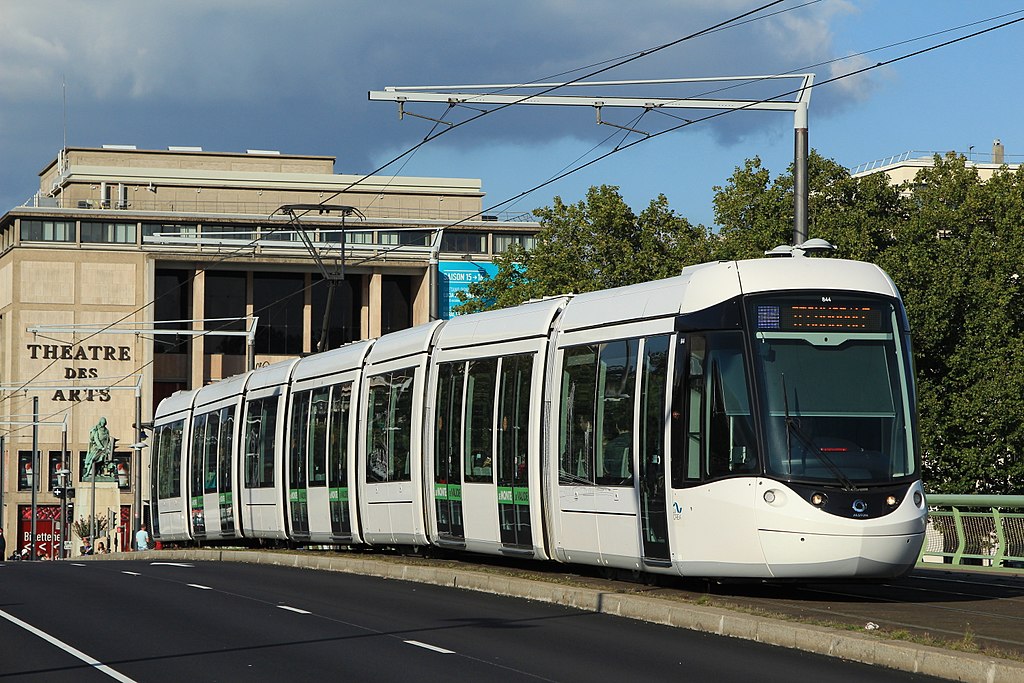
The model was designed for analyze the functioning of the convergent between these two branches and test the relevance of a dynamic control system with the help of lights, in addition to a future reserved lane for public transport (VRTC).
The work was based on the exploitation of SIREDO data (counts every 6 minutes) And of Floating Car Data, making it possible to characterize the speeds and flows over the entire linear path (13 km).
Two typical days have been reconstructed — Median day and Strong day — in order to assess the behavior of the network according to different load levels.
The model selected, of type Dynamic LWR, has been calibrated to accurately reproduce the observed flow rates and travel times, with a discrepancy of less than 10% on the main sections.
The tool simulates the interactions between flows from the A50 and the A501 and the propagation of congestion waves to Marseille.
The study then tested several regulatory scenarios:
The results show that regulation allows a rebalancing travel times between the two branches, a significant fluidity between the convergent and La Penne, and a measurable reduction in hourly variability without major impact on other users.
This modeling made it possible to:
The approach confirmed that a well-parameterized control could reduce up to 30% the variability of travel times and improve the regularity of interurban lines on this corridor.
This project was a successful proof of concept of application of the macroscopic dynamic modeling to operational traffic management.By integrating regulation, reserved lanes and elastic demand, Explain demonstrated the ability of a lightweight scientific model to inform planning decisions and to support the transition to more efficient mobility on metropolitan highways.








%20(1).webp)