





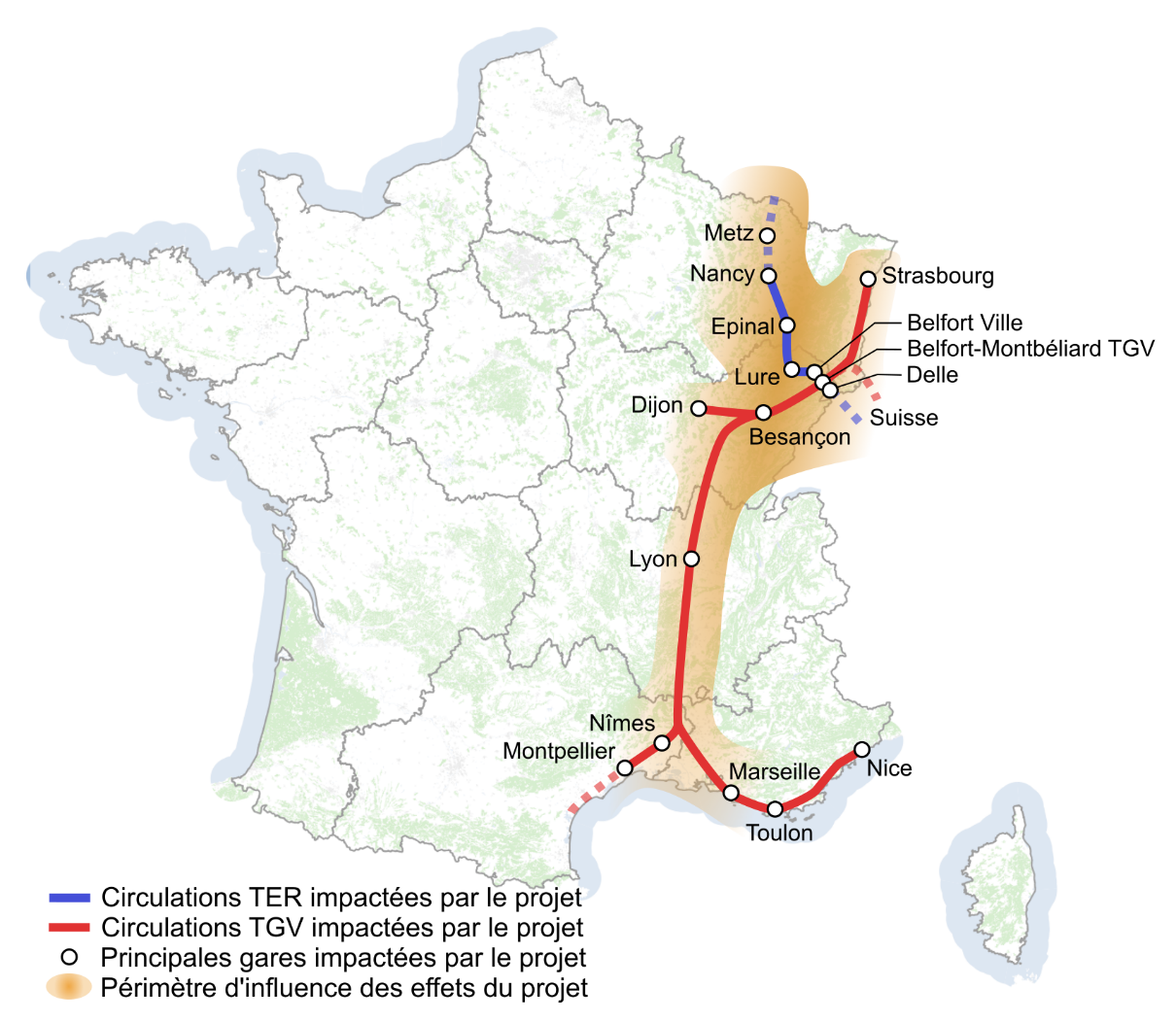
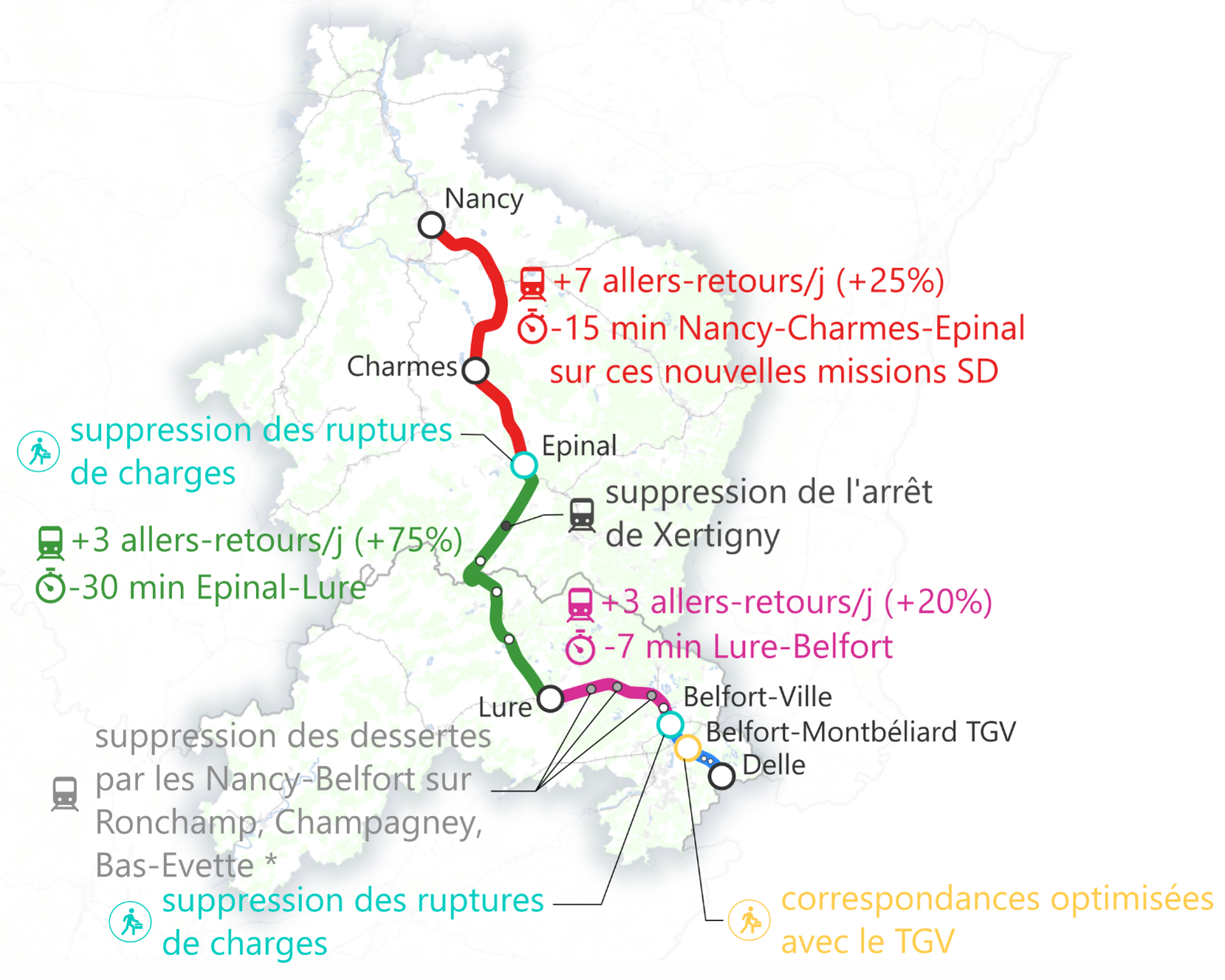
The service project Nancy—Belfort—Montbeliard TGV—Delle is part of the modernization of the eastern rail network and aims to strengthen interregional connections. Explain was commissioned to model the effects of the regeneration of the Épinal—Belfort line and assess the socio-economic impact of the new offer.
The study is based on the comparison of reference scenarios (2021) and project scenarios (2022), integrating the effects of infrastructure works, operational optimization and correspondence gains with the TGV.
The simulations carried out estimate Time savings of 37 minutes between Épinal and Belfort, i.e. 21 minutes related to regeneration, 7 minutes to operation and 9 minutes to rationalization of stops.
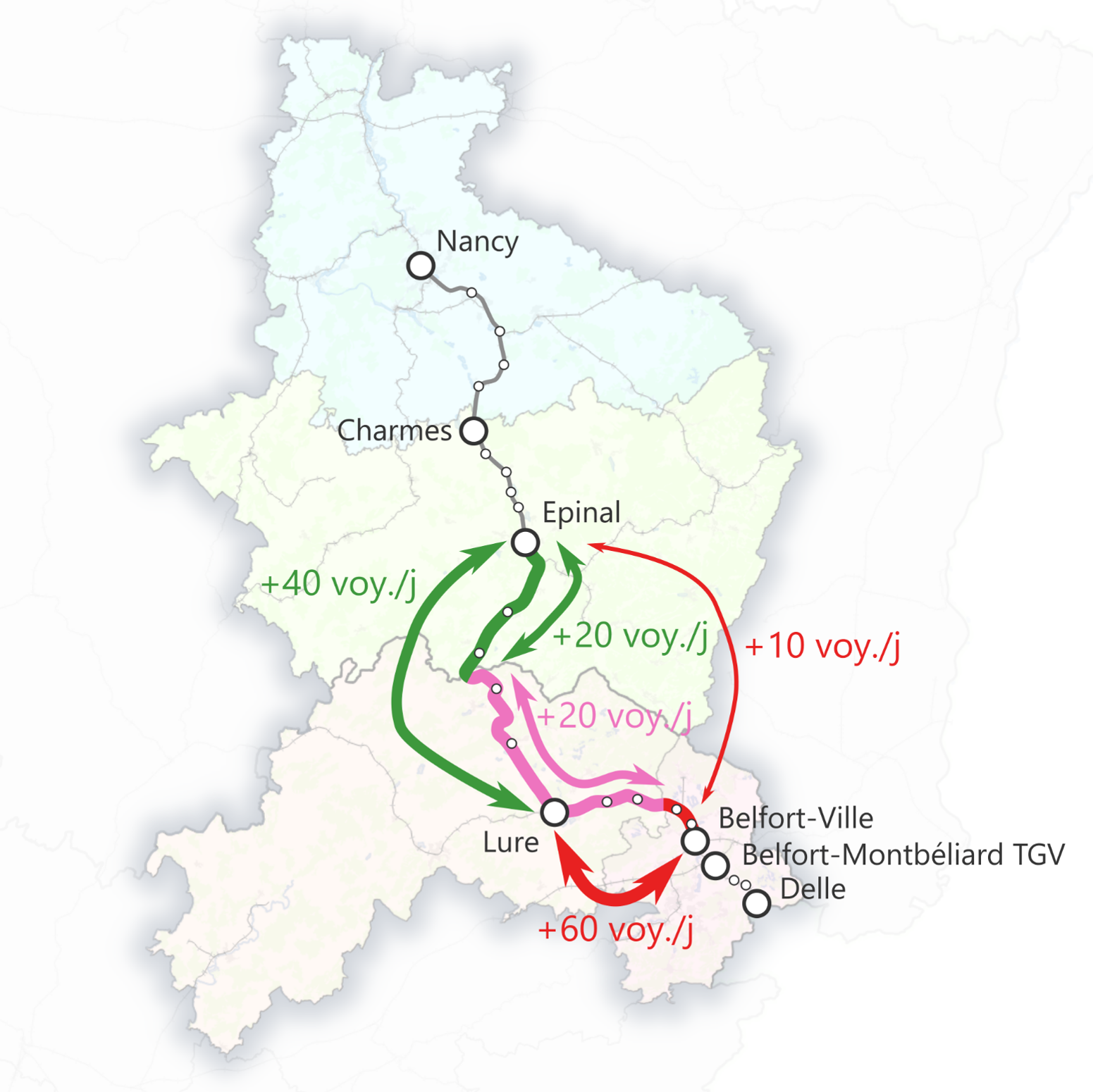
The modeling results show a Increase in rail traffic by 560 additional passengers in 2031, in addition to the 5,000 existing users on the corridor, and an improvement in the competitiveness of the train on long-distance connections to Lyon and Marseille.
Cumulative gains for users reach +34 MILLION € (2021), for a global investment of 119 M€, resulting in a positive socio-economic balance of €42.5 million.
The aim of the study was to quantifying socio-economic benefits of the regeneration of the Épinal—Belfort line and the establishment of a direct Nancy—Belfort service. It aimed to measure the impact of the project on ridership, generalized travel costs, and the collective profitability of the investment, while providing public decision-makers with an objective basis for prioritizing regional rail investments.
The results confirm the socio-economic profitability of the project, with a positive balance thanks to the time and accessibility savings offered to long-distance travelers.The additional recipes from attendance now make it possible to compensate for nearly 45% of operating costs, compared to only 5% in the previous scenarios, reducing the financial burden for the organizing authority.The project also contributes to interregional cohesion by bringing the Nancy, Épinal and Belfort basins closer together, and by improving access to TGV connections to Switzerland and the south of France.
Thanks to this study, Explain demonstrates its ability to finely model the effects of a rail offer And at quantifying socio-economic impacts.The Nancy—Belfort project illustrates how a rigorous modeling and evaluation approach can support public investment decisions, in order to improve the performance of the regional rail network.





.jpg)


%20(1).webp)